Classical CD Reviews
  • Home
  • About
  • Blog
  • Contact
  • Home
  • About
  • Blog
  • Contact

CD Reviews

The wonderful Piatti Quartet plays a wonderful program

1/15/2024

0 Comments

 
Picture
Picture
I have encountered the fantastic Piatti Quartet before, on 2 previous CDs from Champs Hill. Most notable was their 2018 collection entitled “Albion Refracted”, where they play music by Bridge and Britten (and some horrid noise by Turnage) and a premier recording of a wonderful new string quartet by Joseph Phibbs. They also contributed to a comprehensive 4-CD set of Mendelssohn’s complete string quartets (2014) with a performance of his 5th (Opus 44, No 3). In both instances, the Piatti Quartet made a strong and lasting impression - with the vibrancy in their playing and a rhapsodic, almost operatic passion to their music-making.
 
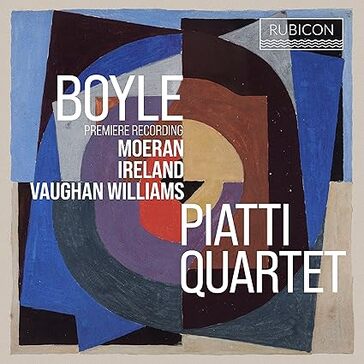
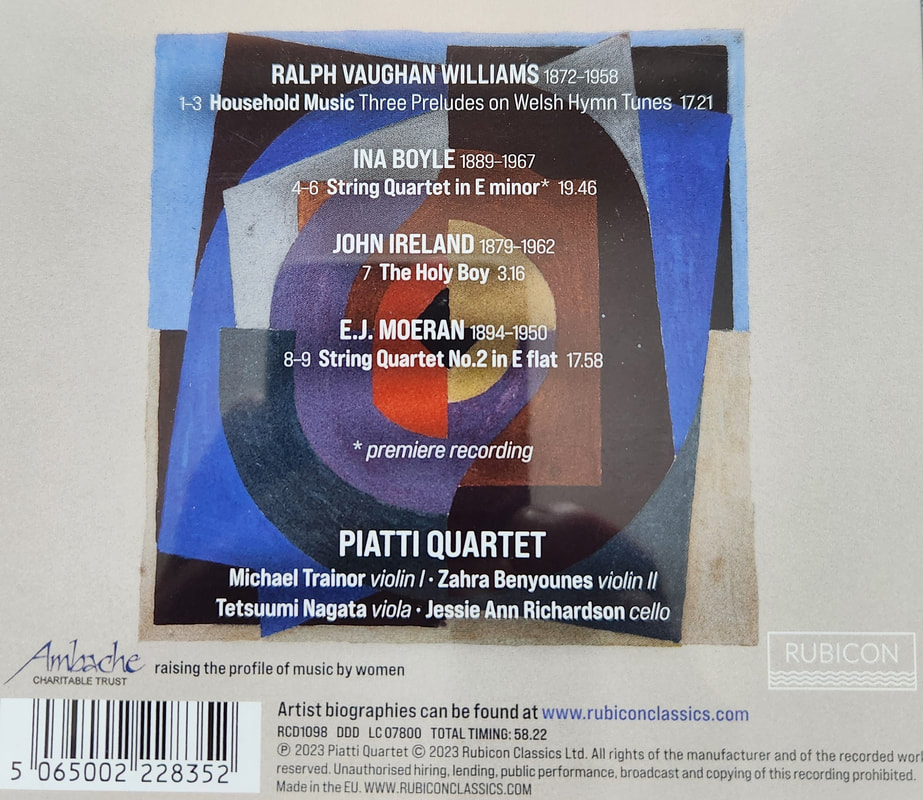
When I spotted this new release on Rubicon Classics, I was instantly attracted by the appealing cover. And I was mildly intrigued by its headliner, composer Ina Boyle, who is given star billing with an enormous font at the very top. They present the premier recording of her 1934 String Quartet. However, there are other attractions which enticed me more - namely a rarity by Ralph Vaughan Williams and the 2nd String Quartet by E.J. Moeran. I have heard both of Moeran’s quartets (played by the Vanbrugh Quartet on a 1998 ASV CD), but it was so long ago I have no real recollection of them. I do love his orchestral music, so I was eager to hear this new recording of his 2nd string quartet.
 
Also included is a short piano piece by John Ireland, “The Holy Boy”, which the composer subsequently arranged for string quartet. It’s one of his Four Preludes and it's a pity this group didn’t see fit to have the remaining three orchestrated to include here. (There is plenty of room on this CD, which plays for just 58 minutes.)
 
Shortly before receiving this new CD, I had just listened to the Verona Quartet’s new Ligeti recording (ironically on the Dynamic label) and found it meticulous and too civilized. Playing all the notes beautifully is simply not enough these days to become a distinguished modern string quartet.
 
What a difference when listening to the Piatti Quartet! Instantly, I again encountered the vibrancy of their sound which immediately drew me in. And their amazing dynamic range kept me there. And this was in Vaughan Williams! Their playing continued to impress throughout the entire program. What truly fabulous string quartet playing this is.
 
To be fair, some of the credit must surely go to Rubicon Records for capturing the group with such presence and realism in an absolutely gorgeous acoustic (St. Silas Church, London). It’s warm and just reverberant enough to provide a glowing blend, while being dynamically expansive. It’s not always easy for an engineer to get the sound of a string quartet just right, with immediacy and a blended body of sound, in an atmospheric, yet detailed acoustic. But when it happens, as it most certainly does here, it’s simply incredible.
 
Vaughan Williams’ "Household Music" (subtitled Three Preludes on Welsh Hymn Tunes) is a real find. Although it has been arranged throughout the years for various combinations of winds, strings, and even a version for string orchestra, we get it here in its original setting for string quartet. The piece begins with an intimately singing Fantasia (reminiscent of Thomas Tallis) followed by a short, vigorous Scherzo. It concludes with an expansive Theme and Variations, similar in style to his Folk Song Suite. This is wonderful music which I had not heard before (in any guise), and we're off to a terrific start.

Coming after it, Boyle’s heretofore disregarded lone string quartet is more rhapsodic and sweet. It is enterprisingly scored and features singing violin writing throughout - gloriously played here by first violinist Michael Trainor. Cast in three movements, it is heartfelt and introspective in a proper, unmistakably British way. It begins with a pensive, free-flowing opening Allegro Moderato, followed by a thoughtful central Adagio - which feels a bit overlong for its material, at over 8 minutes. The final Allegro molto then is far too short (well under 4 minutes) and isn’t as uplifting or vigorous as I had hoped. A more striking contrast from the earlier sections would have been beneficial - perhaps with a touch more molto to it and a glimmer of good spirits as well. It remains rather determined to the very end.
 
Taken as a whole, this Quartet is pleasing and enjoyable, if not necessarily innovative or enduringly memorable. However, it surely doesn’t deserve the neglect it has suffered. It is quite a discovery for this wonderful group to present as the centerpiece of this album.
 
Best of all though, is undeniably Moeran’s 2nd quartet. It was published posthumously and its composition date is apparently unknown. However, it sounds decidedly late period. (The booklet suggests post-WWII.) It has an easygoing folksong feel with more than a hint of Dvorak running all through it. The Allegro Moderato is rhapsodic and much more passionate than anything else on the program. And here the Piatti Quartet really shines. They play with a soaring, almost operatic quality which is extremely moving. This, combined with the suddenness of dynamic contrasts, is appealing and thoroughly engaging.
 
The movement closes with a short scurry of activity before calming into the 2nd movement. The opening Lento establishes a pensive mood on the viola, soon joined by a sweetly singing 1st violin. The two engage in some wonderful interplay, as if in impassioned conversation. The central section takes off in a rollicking Irish jig, with more Dvorak heard in the singing violin line up above it. Hints of Ravel’s Quartet make an appearance in the rhapsodic Andante, which eventually leads to a captivating central section played con sordino. A toe-tapping folksong emerges once again in an animated jaunt through the wide-open countryside, taking us to the end.
 
Rubicon includes a simple booklet with concise notes about the music, but nothing about the quartet or individual musicians. I guess we have to go to the internet for that. Otherwise, the production is first class and this is a most rewarding and valuable release - not only for the rhapsodic, dynamic, enraptured playing, but also for the wonderfully chosen program of music.
0 Comments


Leave a Reply.

    Author

    David Rowe

    Categories

    All

    RSS Feed

Proudly powered by Weebly